Skip to content

    SHA and SHIF navigator

    Navigate SHA without the guesswork.

    The Social Health Authority replaced NHIF in October 2024. Here is how to register, what you pay, what each fund covers, and how to check a facility before you travel.

    What you pay

    2.75% of income, at least KSh 300.

    If you are employed, your employer deducts 2.75% of your gross salary. If you are self-employed or work informally, SHA sets 2.75% of your household income through means testing. Both have a minimum of KSh 300 a month and no upper limit.

    SHA's published rules do not say what applies to households unable to pay. Ask SHA or check the means-testing page on sha.go.ke.

    KSh

    Estimated contribution

    KSh 1,650/ month

    2.75% of gross salary, taken through payroll. At least KSh 300 a month, with no upper limit.

    An estimate only: SHA assesses your actual amount. Rates as published by SHA, last checked 5 Oct 2026. sha.go.ke/premium-rates

    Quick answers

    SHA, in a sentence or two.

    Checked against sha.go.ke on 5 October 2026. SHA rules change; trust SHA's own pages if they differ.

    How much is the SHIF contribution in Kenya?
    2.75% of income, with a minimum of KSh 300 a month and no upper limit. Employed members pay through their employer from gross salary. Self-employed and informal members pay 2.75% of household income, set by SHA through means testing (checked against sha.go.ke on 5 October 2026).
    How do I register for SHA?
    Dial *147# or call 147, register online at sha.go.ke, or get help from a Community Health Promoter. Registration is free and you do not need an app.
    What replaced NHIF?
    The Social Health Authority (SHA) replaced NHIF in October 2024. Contributions are now called SHIF (Social Health Insurance Fund).
    What does SHA cover?
    SHA groups its benefits into three funds: the Primary Healthcare Fund, the Social Health Insurance Fund, the Emergency, Chronic and Critical Illness Fund. Services SHA lists include outpatient care, maternity, inpatient care, mental health, renal care and surgery. Whether a specific service or facility is covered is a question for SHA.
    How do I check if my SHA cover is active?
    Check your status with your ID number on the SHA eligibility page (eligibility.sha.go.ke), or on the Afya Yangu portal (afyayangu.go.ke). Cover depends on your contributions being up to date.
    Does SHA cover dental care?
    Dental care is not listed among the benefits SHA publishes, as checked on 5 October 2026. Confirm with SHA before you rely on it.

    Register

    Four steps, from your phone.

    Registration is free. You do not need an app.

    Other ways to register

    • Call 147
    • Online at sha.go.ke
    • In person, with help from a Community Health Promoter
    1. 1

      Dial *147#

      Choose to register and enter your ID number. Your details are pulled from the national registry for you to confirm.

    2. 2

      Answer the means-testing questions

      If you are not on a payslip, SHA asks about your household so it can set your contribution.

    3. 3

      Add your dependants

      Add a spouse and children with their ID or birth certificate numbers, as the SHA form allows.

    4. 4

      Set a PIN

      Create a four-digit PIN for your SHA account, then check your status on the SHA portal.

    What SHA covers

    Three funds, one membership.

    SHA groups its benefits into three funds. These are the services SHA lists for each. Whether a specific service or facility is covered is a question for SHA, or for Tabibu to help you frame.

    Primary Healthcare Fund

    • Outpatient care
    • Maternity, newborn and child health
    • Cancer screening and management
    • Optical health
    • End-of-life services

    Social Health Insurance Fund

    • Medical inpatient services
    • Maternity and neonatal services
    • Renal care package
    • Mental health services
    • Surgical services

    Emergency, Chronic and Critical Illness Fund

    • Ambulance evacuation
    • Accident and emergency services
    • Critical illness care
    • Palliative care
    • Chronic illnesses

    Before you go

    Four checks that save a trip.

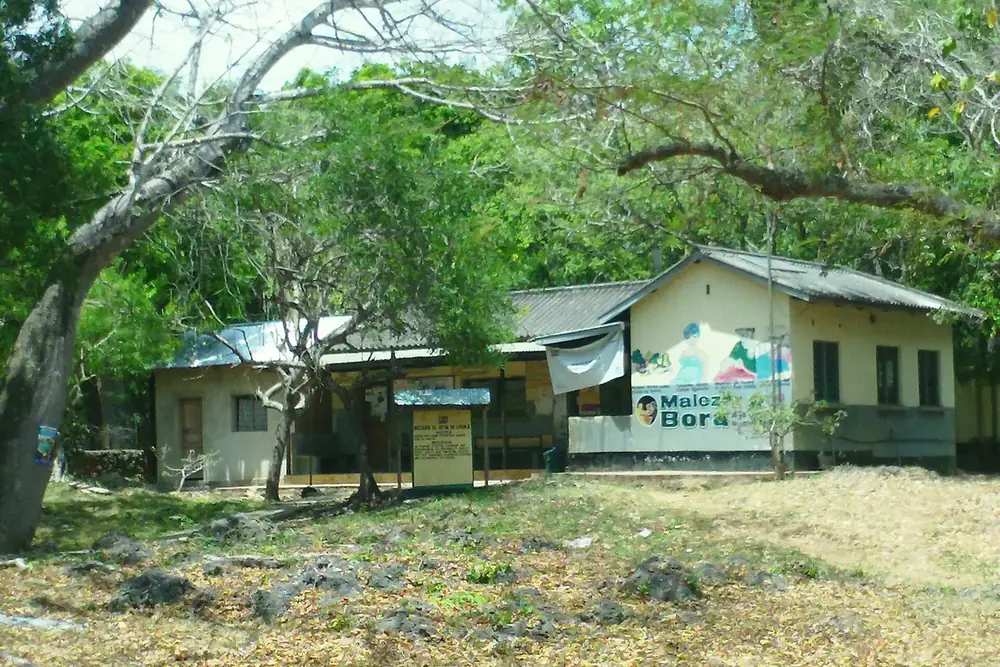
    A small public dispensary building among trees at Shimoni, Kenya
    A public dispensary at Shimoni, on the Kenyan coast. Dispensaries are the first level of care. Photo: Nealoveselectricity, CC BY-SA 3.0, via Wikimedia Commons; cropped and resized.
    • Check your contributions are current

      Cover depends on your contributions being up to date. Check your status with your ID number on the SHA eligibility page.

    • Confirm the facility is contracted with SHA

      SHA pays contracted facilities. Check this before the day you need care, especially for a delivery or a planned procedure.

    • Know the level of facility you need

      A dispensary, a health centre and a county hospital handle different problems, and a referral usually goes up a level. Ask Tabibu which level fits your situation.

    • Carry your ID and SHA number

      Bring your national ID (or a child’s birth certificate) and your SHA number to the counter.

    Official sources

    Checked against sha.go.ke on 5 October 2026. SHA rules change: if something here differs from SHA's own pages, trust SHA, and tell us so we can fix it.

    Have a question about your cover?

    Ask about registration, a referral, a claim or which facility to use. Tabibu answers with its sources.

    Ask Tabibu